
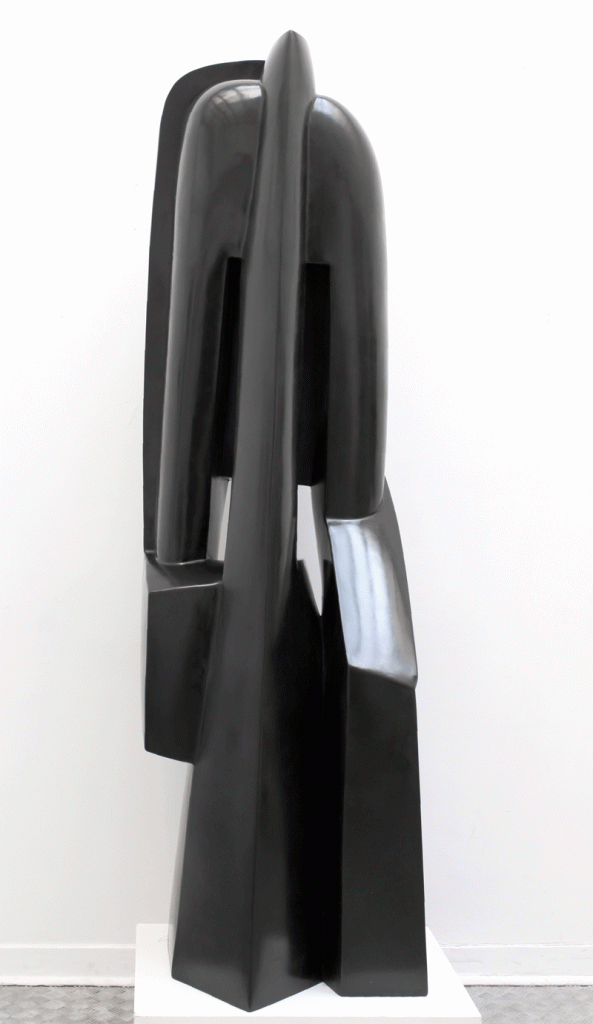
PERSONNAGE CADAC (FIGURE CADAC)
Parvine Curie
Group exhibition
19/03/2026 - 28/05/2026
Space N°4
Galerie LOFT invites you to discover the intimate journals of four women artists: Hajar Satari, Parvine Curie, Liên Hoàng-Xuân, and Margaux Derhy.


Each of them seeks to invent her own visual language rooted in life experiences and family narratives, whether these take root in their country of origin or their country of adoption. Imbued with intimacy, their works form a cartography of these plural identities.
An Iranian artist now based in France, Hajar Satari transcribes her daily experiences in her work: the studio, the domestic space, but also high-altitude mountains. She strives to materialize the different temporal scales she perceives in these places that form the foundation of her life and artistic practice.
Of Franco-Iranian origin, Parvine Curie was born and raised in France. After traveling across Europe, she settled in Barcelona. Her work reflects her life as a woman and a mother, while also integrating the architectures that have marked her journeys—temples, pyramids, churches, particularly those of Catalonia. These forms become witnesses to her observations and her inner transformations.
A French, Vietnamese, and Tunisian artist, Liên Hoàng-Xuân weaves connections between these territories in order to imagine hybrid places. Before obtaining her DNSAP from the École des Beaux-Arts de Paris, she graduated from the Academy of Fine Arts in Beirut, Lebanon. She creates a dialogue between these cities of the “South of nowhere,” crossed by electrical cables and housing blocks, where autobiographical references intertwine with urban landscapes inhabited by mystical figures.
Franco-Moroccan, Margaux Derhy pursues a deep exploration of her origins, developing a singular artistic language through embroideries, murals, and canvases that recount her family history. Drawing from photographic archives—particularly those of her paternal family, who left Morocco in 1967—she questions what has been lost, silenced, altered, or transformed through exile, migration, and processes of assimilation. Her studio in Massa, Morocco, where she collaborates with women from the region, as well as the founding of the Cercle de l’Art in 2020—an initiative dedicated to supporting Francophone women artists—extend this commitment that is both intimate and collective.
Maternal figures, family and romantic feelings, personal trajectories, and the reclaiming of origins: these artists explore different forms of expression, mobilizing archives and memories to give rise to deeply personal works in which the intimate becomes universal.


Margaux Derhy was born in France to a French mother and a Moroccan Berber father. She studied in London at Central Saint Martins and earned a Master’s in Painting from the Royal College of Art. She currently lives and works between Paris and Massa, Morocco. Her practice explores memory, heritage, and the complexities of "pluridentity" (multi-identity) through painting and embroidery. Drawing from photographic archives—specifically those of her paternal family, who left Morocco in 1967—she examines what is lost, silenced, or transformed by migration and assimilation.

Parvine Curie was born in Nancy in 1936, of French-Iranian origin. After her studies she left to visit Europe and decided to settle in Barcelona in 1957, discovering Catalan art. She practiced sculpture as an autodidact, following the advice of sculptor Marcel Marti with whom she had a son, David in 1959. In 1970, she moved to Paris and presented at the young sculpture salon, the work Première Mère, which marked the sculptor François Stahly. He invites her to come and work alongside him at the collective workshop in Crestet (Vaucluse). Parvine learns the basics of the trade, sculpts wood and stone. She married Stahly in 1975 and subsequently carried out numerous public commissions. Her work, which was initially more hieratic, then evolved into a more dynamic style. Her sculptures, between figures and architecture, and strongly inspired by the places she visited, are marked by pure lines and materials and testify to her constant desire to question space and light.
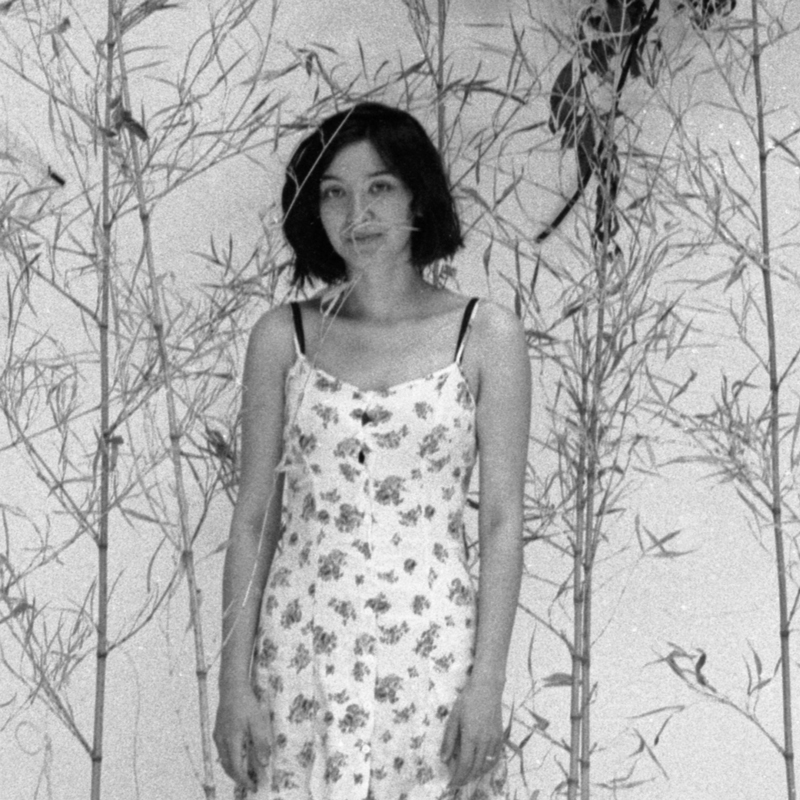
Liên Hoàng-Xuân, an artist of Vietnamese, Tunisian and French origin, was born in Paris in 1995. Multi-disciplinary, her installations, paintings, prints and videos enable her to blend memories with a loving imagination in a fictional city she calls the "South of Nowhere": a blend of Tunis, Saigon and Beirut.

My creative process is divided between three experiential spaces: the studio, my home, and high-altitude mountain environments. Together, these places form the foundation of my life as an artist. In each of them, I seek to materialize singular temporal scales, relying on a slowed-down relationship with and a diluted perception of time—a state I had previously explored through the daily consumption of opium.


