Skip to content
CHENG SAN H. 2m CHENG SAN H. 2m CHENG SAN H. 2m CHENG SAN H. 2m CHENG SAN H. 2m CHENG SAN H. 2m CHENG SAN H. 2m CHENG SAN H. 2m CHENG SAN H. 2m

CHENG SAN H. 2m

Philippe Hiquily

  • Year : 2000
  • Material : Iron
  • Signature : Signed P.H.
  • Editions : Edition of 8
  • Thèmes : Figuratif, Monumentale
  • Tone : Dark

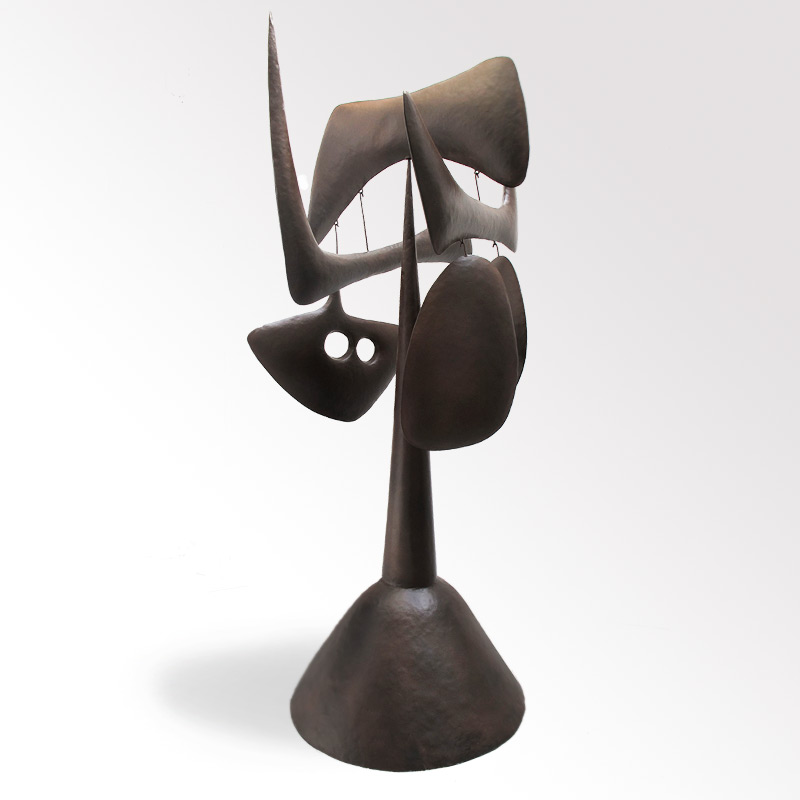
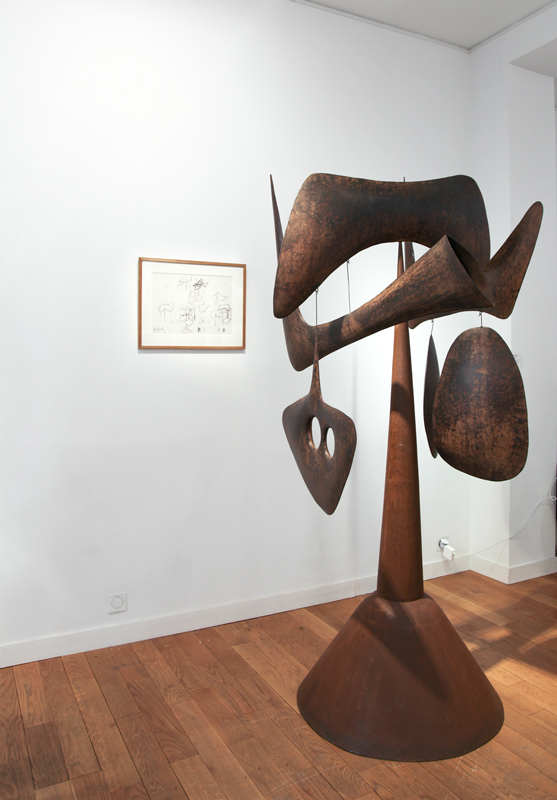
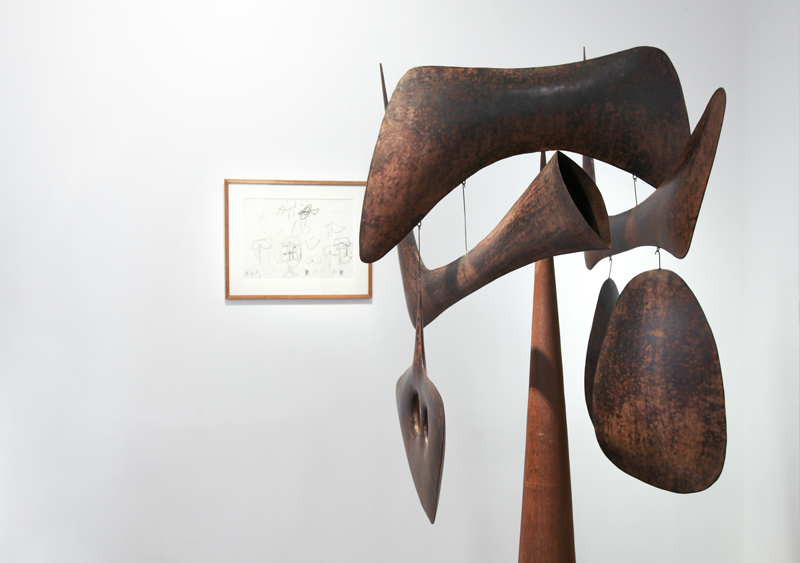
In the mobiles he created in the early 2000s, Philippe HIQUILY returns to his first loves on the themes of women and movement. By decomposing the woman’s body in this work, recomposing its balance, the artist reinvents it, fragile and delicate, in an abstract form. Suspended in the air, each of its elements has a life of its own but is connected to a whole in a collective trajectory that harmonizes in a game of levitation. In movement, it is like a carillon that the metal rings and resonates, in a joyful random and structured tinkling. The iron beauty then comes to life. Constantly metamorphosing, it sings and dances before our eyes, to the tune of a captivating aerial ballet.

Referenced in the Artist’s Raised Catalog (1948-2011) Vol.1, under No. 632 – P 410
LOFT Editions, 2011, Scu.LSq.Ed.Ac.220


EXHIBITIONS

– Philippe Hiquily et Wang Keping : Sculpture et sensualité, exposition at Galerie LOFT, as part of the Art Saint-Germain-des-Près event, from May 14 to 17, 2009


ARTIST

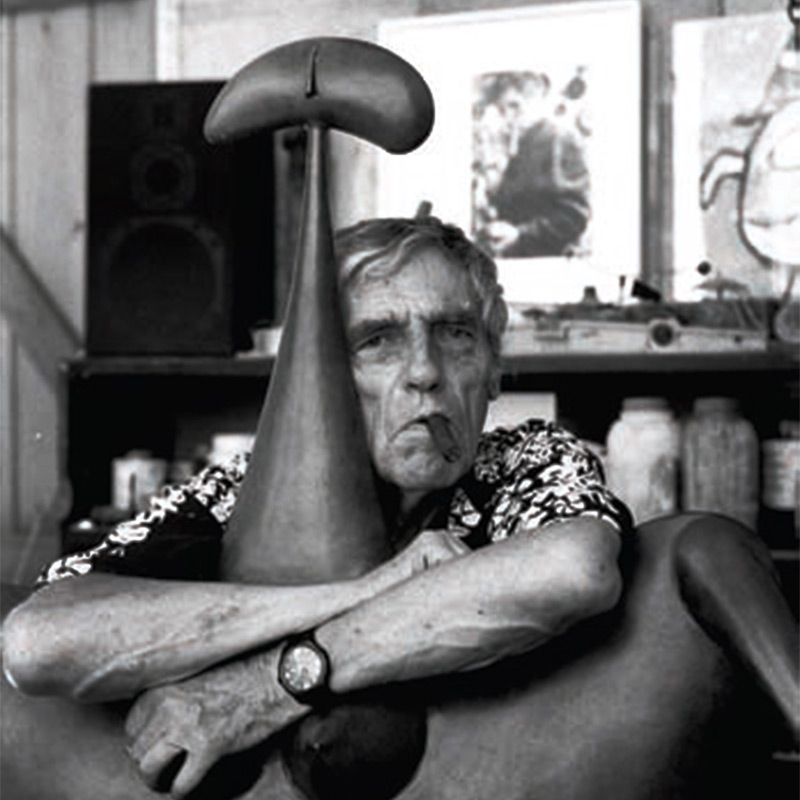
Philippe Hiquily, born March 27, 1925 in the 18th arrondissement of Paris, died March 27, 2013 in Villejuif, was a French sculptor and designer. At 18 years old, Philippe Hiquily enlisted in the army to break with his family and took part in the campaigns in France and Indochina (1945). He has been a metal sculptor since the early 1950s (iron, sheet metal, brass, aluminum).

At the Ecole des Beaux-Arts in Paris from 1948 to 1953, he frequented the workshops of sculptors Jean Tinguely and Germaine Richier, for whom he made sculpture pedestals. He exhibited for the first time in 1955 at the Palmes gallery in Paris, then at the Contemporaries gallery in New York in 1959, where he met the great names of American art (Léo Castelli, Rauschenberg, James Rosenquist, Jasper Johns, Isamu Noguchi…). Success was not long in coming: the prestigious New York museums (MOMA and Guggenheim) bought several of his works. However, he will experience a crossing of the desert from 1965 to 1980, without however stopping to create.

His studio was for a long time located in the 14th arrondissement of Paris, rue Raymond Losserand, at 32, now converted into an apartment. A copy of La Marathonienne is on display in the courtyard to remind us that this is where Hiquily’s genius flourished. He exhibited regularly at the Salon de Mai and Jeune sculpture in Paris. From 1960, he created furniture, furniture with a dreamlike and surreal spirit. The creation of bronzes began around 1980.

More about Philippe Hiquily