Skip to content
Chaise architecturale Chaise architecturale Chaise architecturale

Chaise architecturale

Francesco Marino Di Teana

  • Year : 1956-58
  • Material : Painted steel with black patina
  • Signature : Signed with the artist's stamp
  • Editions : Edition of 48 ex. + 9 A.E.
  • Tone : Dark
  • Thèmes : Architectural Design
  • Dimensions : 42 x 44 cm

Referenced in the Catalog Raisonné of the artist under No. 1300 – P. 487

Éditions LOFT, 2018, under the direction of Nicolas Marino di Teana and Malika VINOT


TABLES & COFFEE TABLES

The furniture created by Marino di Teana still remains relatively rare. In addition to his few proposals for office pieces, he actually designed only twenty models of tables. However, all emphasize the artist’s interest in composition games and their projection into areas beyond that of sculp- ture. Fascinated by the Middle Ages, both for the greatness of the means deployed to build castles and cathedrals and for the meticulous and perfect work of stonemasons, Marino di Teana, during his lifetime, completed several works in tribute to these builders. This is how, in the late 1970s, he imagines a set of tables and consoles inspired by the colonnade structuring of Cistercian abbeys.

Venetian painting and architecture are also suggested in his Tribute to Canaletto table. As for the Space & Forms and Future City tables, it is his own architectural sculptures that become the source of inspiration for the development of new forms of design.


ARTIST

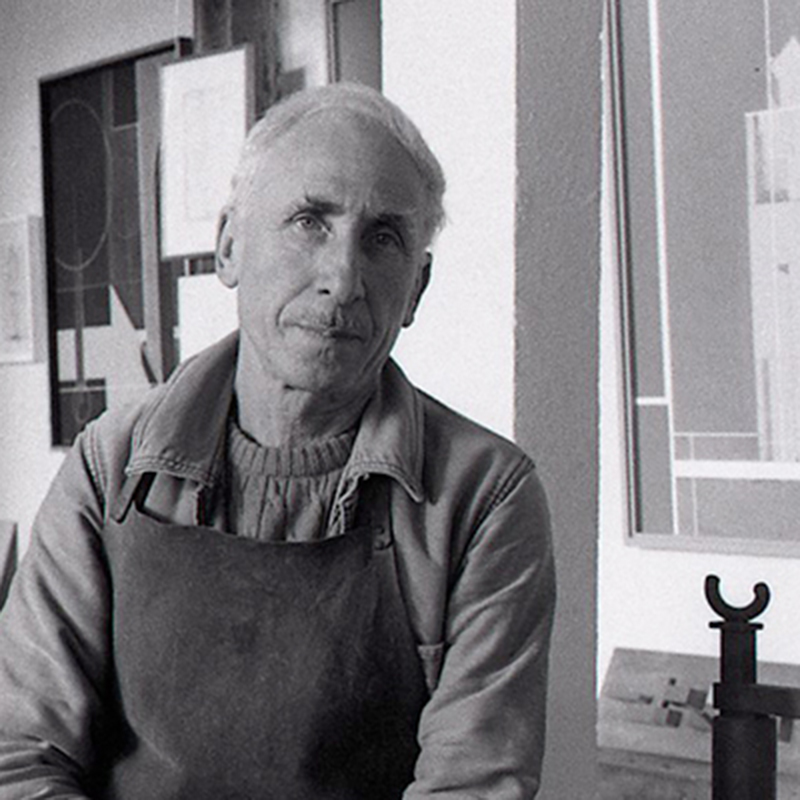
Francesco Marino Di Teana is a painter, sculptor, architect, poet and philosopher, who marked the sculpture of the 1950s-60s with his theories on the tri-unitarian logic which integrate the “void” as an active element of pictorial and architectural composition.

An insatiable builder, Francesco Marino di Teana designed various pieces of furniture in the mid-1950s. While he lives off odd jobs as a decorator, he develops in parallel to his work as a sculptor some astonishing creations, true hybrids between the aesthetic design of the 1950s and the “architectural” construction specific to the artist. Initially intended for his close friends and early collectors, these “confidential” works are now brought to light thanks to the research and investigation work carried out around the preparation of the catalog raisonné. The finalization of their edition also allows us to finally have direct access to these elegant and avant-garde “furniture-sculptures”.

More about Francesco Marino Di Teana