

Dado
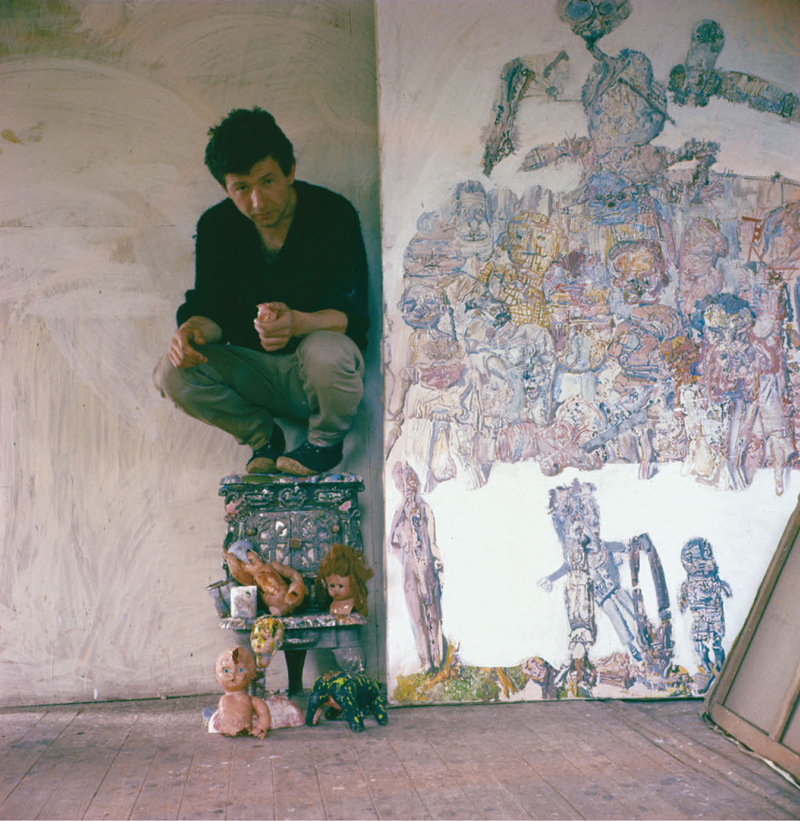
Dado, whose real name was Miodrag Djuric, was an artist born on October 4, 1933, in Montenegro, then part of the Kingdom of Yugoslavia. After studying at the Academy of Fine Arts in Belgrade, Dado moved to Paris in 1956, where he began exhibiting his work. Over the years, he gained international recognition for his distinctive artistic output. His paintings and engravings were shown in numerous galleries and museums around the world, including the MoMA and the Guggenheim Foundation in New York, as well as the Centre Pompidou, and he was honored with many prestigious awards throughout his career.
Despite his fame, Dado remained true to his artistic independence and continued to explore new creative territories until his death in 2010 in Paris.
Works

Sans titre

Violaine
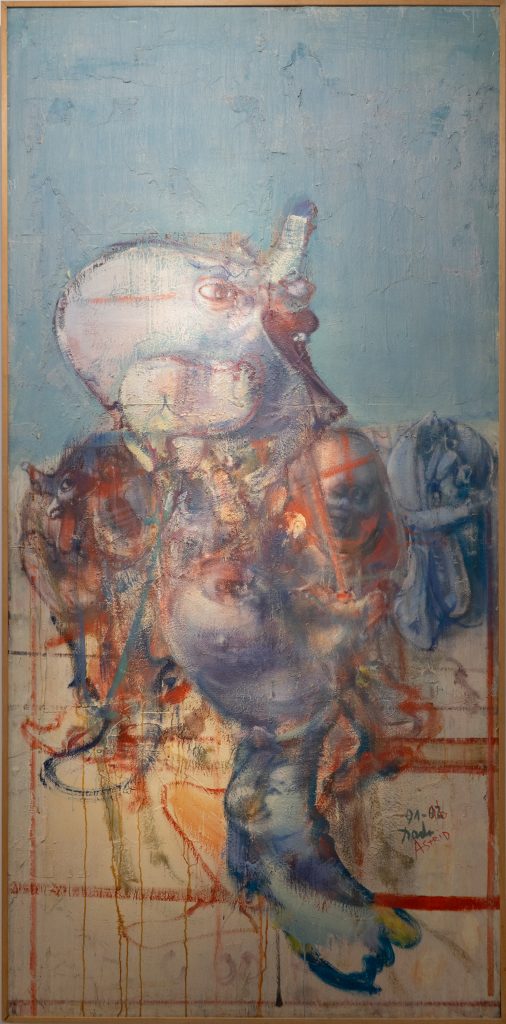
Astrid

LES OISEAUX D’IRÈNE – Dessin préparatoire

Anatomie et physiologie
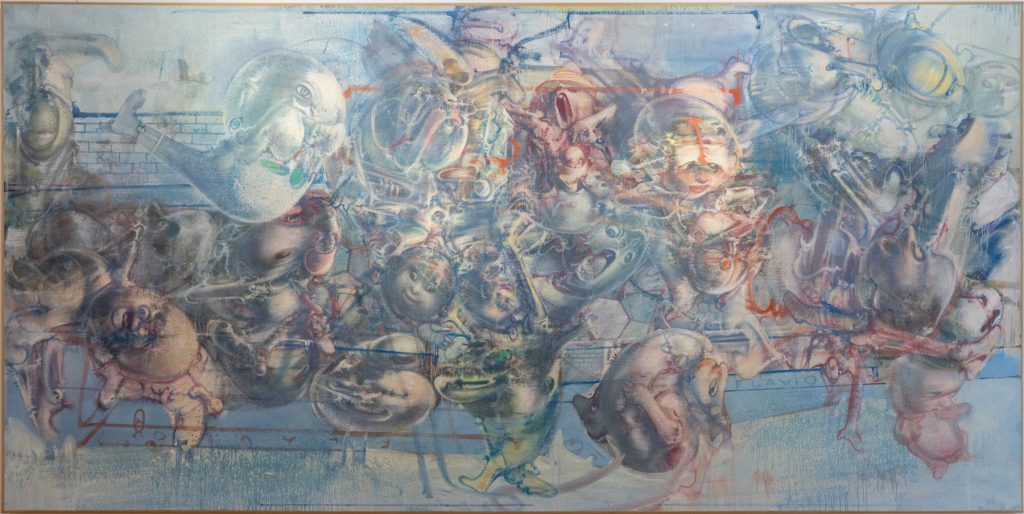
Flavio
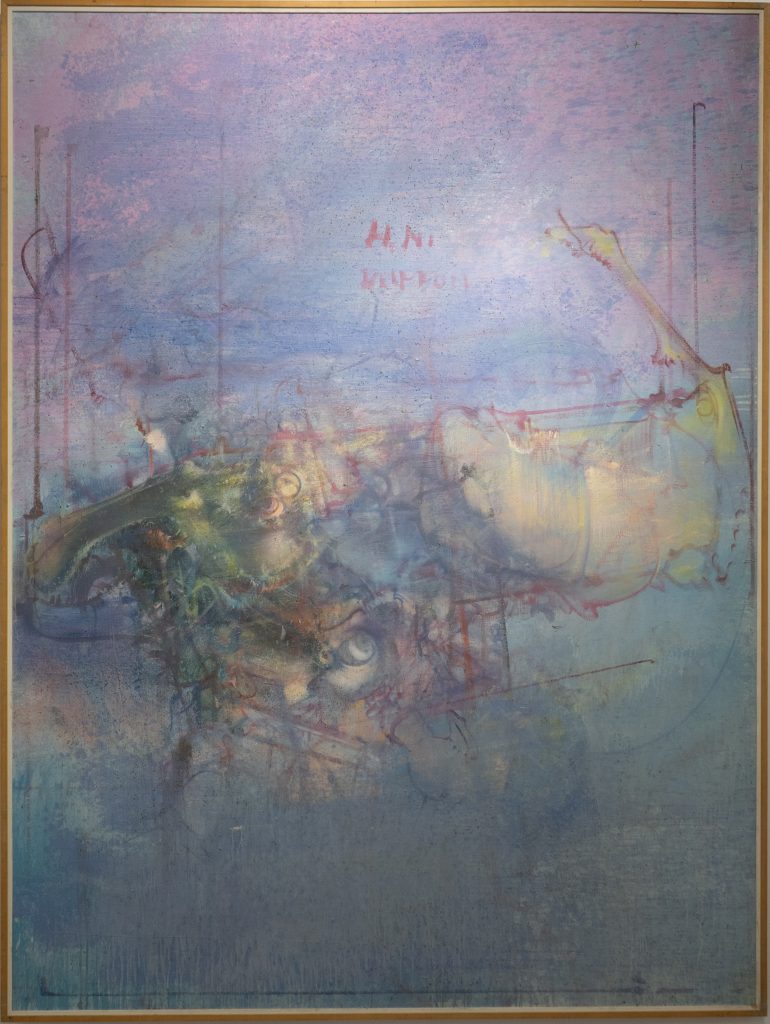
H.N Buffon

BOMBYX
Biography
Miodrag Đurić, known as Dado (a nickname given by his mother), was born in 1933 in Cetinje, Montenegro. Orphaned by his mother at the age of eleven, he carried painful memories of the years of Montenegro’s occupation, first by Italy, then by Germany from 1943. After the war, thanks to a scholarship, he studied at the Academy of Fine Arts in Belgrade, where he attended the classes of Marko Čelebonović, who encouraged him to go to Paris.
Miodrag Đurić, known as Dado (a nickname given by his mother), was born in 1933 in Cetinje, Montenegro. Orphaned by his mother at the age of eleven, he carried painful memories of the years of Montenegro’s occupation, first by Italy, then by Germany from 1943. After the war, thanks to a scholarship, he studied at the Academy of Fine Arts in Belgrade, where he attended the classes of Marko Čelebonović, who encouraged him to go to Paris.
A few years later, in 1956, he met Jean Dubuffet in Gérard Patris’s lithography studio, where he was working and living. Dubuffet introduced him to the gallerist Daniel Cordier, who was impressed by his paintings of babies. Inspired by De Chirico, Carrà, and the early Surrealists, these works already displayed the dreamlike realism characteristic of his art. The influence of his origins was evident in his obsession with depicting human misery and suffering, themes shared with the popular oral poetry of the Slavic countries. He masterfully painted strange, mutilated beings, fascinated by the organic processes of life and death, the central subject of his work.
Daniel Cordier organized his first solo exhibition in Paris in 1958. Shortly afterwards, Dado left Paris for Hérouval in the French Vexin. From then on, his paintings were bathed in the light of the Vexin. He took part in the “Anti-procès” exhibitions (1960), co-organized by Alain Jouffroy and Jean-Jacques Lebel. In 1961, the suicide of his friend Bernard Réquichot affected him deeply. In his memory, he created one of his masterpieces, La Grande Ferme. In 1962, he held his first exhibition in the United States, where he met his future wife, Hessie, and adopted her children. Hérouval became a place of “total art,” filled with sculptures and repurposed objects covered in frescoes, where he welcomed painters, gallerists, and collaborators.
From the late 1960s onward, he began to explore new techniques such as sculpture, collage, and engraving, which he also used to illustrate fine press books. In 1970, the Centre National d’Art Contemporain dedicated a retrospective to him. In 1972, he took part in the exhibition Twelve Years of Contemporary Art in France. From the early 1990s, as war broke out in the former Yugoslavia, his work increasingly extended into space, using abandoned buildings, but he also took an interest in digital art and designed his own website—his virtual anti-museum—as a kind of testamentary work. He passed away in 2010 in Pontoise.
Exhibitions
Videos

Vidéo
Dado • Quentin Garel
Career
Expositions personnelles (Sélection)
2024-2025
“Dado: Histoire naturelle, 1953-2000”, Serbian Academy of Sciences and Arts, Belgrade.
2024
“Portrait en fragments”, Galerie Jeanne Bucher Jaeger, Paris
2018
« Dado, de l’intime au mythe », rétrospective au musée des Beaux-Arts de Pau, France
2015
« Dado, Horama », rétrospective à l’Abbaye d’Auberive, Auberive, France
2012
« Dado. Danse macabre », Kunsthalle, Düsseldorf, Allemagne
2011
Salle en hommage à Dado, Centre Pompidou, Paris, France Salle en hommage à Dado, Les Abattoirs, Toulouse, France
« Hommage à Miodrag Djuric, DADO. Autour de trois grands triptyques », galerie Jeanne Bucher, Paris, France « Hommage à Dado », Musée régional d’art contemporain Languedoc-Roussillon, Sérignan
2010
Exposition universelle de Shanghai, Pavillon Monténégrin, Chine Église Saint-Martin, Montjavoult, France
Expositions personnelles (Sélection)
2024-2025
“Dado: Histoire naturelle, 1953-2000”, Serbian Academy of Sciences and Arts, Belgrade.
2024
“Portrait en fragments”, Galerie Jeanne Bucher Jaeger, Paris
2018
« Dado, de l’intime au mythe », rétrospective au musée des Beaux-Arts de Pau, France
2015
« Dado, Horama », rétrospective à l’Abbaye d’Auberive, Auberive, France
2012
« Dado. Danse macabre », Kunsthalle, Düsseldorf, Allemagne
2011
Salle en hommage à Dado, Centre Pompidou, Paris, France Salle en hommage à Dado, Les Abattoirs, Toulouse, France
« Hommage à Miodrag Djuric, DADO. Autour de trois grands triptyques », galerie Jeanne Bucher, Paris, France « Hommage à Dado », Musée régional d’art contemporain Languedoc-Roussillon, Sérignan
2010
Exposition universelle de Shanghai, Pavillon Monténégrin, Chine Église Saint-Martin, Montjavoult, France
2009
53e biennale de Venise, Italie « Clarté de l’obscur », Centre culturel français, Belgrade, Serbie
« Les Oiseaux d’Irène », galerie Beaubourg, Casino Vernier, Alliance française, Venise
« Val-Fourré », E.C.M. Le Chaplin, Mantes-la-Jolie, France
2008
« Les anges du Monténégro », galerie CGB, Honfleu, France
2004
Collection Daniel Cordier, galerie Chave, Vence, France
2002
Galerie Jacques Girard, Toulouse « La Chapelle Saint-Luc », galerie Alain Margaron, Paris
1999
« Peintures, Dessins, Sculptures », Espace d’art contemporain Gustave Fayet, Sérignan, France
1996
« La méchante petite fille », Galerie Beaubourg, château Notre-Dame des Fleurs, Vence, France
« Le trousseau de Maria L. », Galerie Rachlin Lemarié, Paris
1993
Centre culturel français de Karlsruhe, Allemagne Espace d’art contemporain Gustave Fayet, Sérignan, France
1991
Création d’un musée Dado à Cetinje, Monténégro 1987 Galerie Forni, Bologne, Italie
1984
Galerie Beaubourg, Paris, France
1983
galerie Mata, Ljubljana, Yougoslavie
1981
« Dessins et collages », Cabinet des arts graphiques, Centre Pompidou, Paris, France
1980
Galerie Isy Brachot, Paris, France
1976
Galerie Malmgram, Göteborg, Suède
1975
« Œuvres sélectionnées », galerie Isy Brachot, Bruxelles
1974
Aberbach Fine Art, New York, États-Unis
1971
Galerie Jeanne Bucher, Paris, France
1970 Rétrospective, Centre national d’art contemporain (CNAC), Paris, France The Byron Gallery, New York, États-Unis
1969
Galerie Aujourd’hui, Bruxelles, Belgique
1967
Galerie André François-Petit, Paris, France
1962
Galerie Daniel Cordier, New York, États-Unis
1960
Galerie Daniel Cordier, Francfort, Allemagne
1958
« Peintures », galerie Daniel Cordier, Paris
Expositions collectives (selection)
2026
Narratives, Galerie Loft, Paris, France
2024
Dual exhibition with Quentin Garel, Dado & Quentin GAREL, Galerie Loft, Paris, France
2022
« Paris et nulle part ailleurs », Musée de l’Histoire de l’immigration, Paris
2007
« Dado-Dubuffet », Sérignan, Musée régional d’art contemporain Languedoc-Roussillon
2002
« Dado-Réquichot : La guerre des nerfs », Toulouse, Les Abattoirs
1997
« Exposition Made in France 1947-1997, 50 ans de création en France », Paris, Centre Pompidou
1989
« Donations Daniel Cordier. Le regard d’un amateur », Paris, Centre Pompidou
1972
« 60/72, 12 ans d’art contemporain en France », Paris, Grand Palais.
Collections publiques
Belgique
Bruxelles, Musées royaux des Beaux-Arts de Belgique
Etats-Unis
Boston, musée de l’université Brandeis
Chicago, Institut d’art de Chicago
New York, musée Solomon R. Guggenheim.
France
Fonds national d’art contemporain
Bibliothèque nationale de France
Musée national d’Art moderne
Musée d’Art et d’Histoire du judaïsme
Saint-Étienne, musée d’Art moderne et contemporain
Sérignan, musée régional d’Art contemporain Occitanie
Toulouse, Les Abattoirs
Monténégro
Cetinje, musée national du Monténégro
Norvège
Oslo, musée d’Art contemporain Astrup-Fearnley
Pays-Bas
Amsterdam, Stedelijk Museum
Rotterdam, musée Boijmans Van Beuningen
Serbie
Belgrade, musée d’Art contemporain